
Whenever one opts for a new credit card, it comes with an annual fee, which we have to pay each year to keep the credit card active and take advantage of the benefits offered by the credit card. But many credit cards come with an annual fee waiver or an annual fee reversal. At first, it seems like the same thing, but they actually work in a very different way.
An annual fee waiver is when you do not have to pay the fee. This happens when you meet conditions. For example, you may have to spend an amount in a year. It could be part of a joining offer. The fee is never charged to you in the place. You do not have to pay for it and then get it back later.
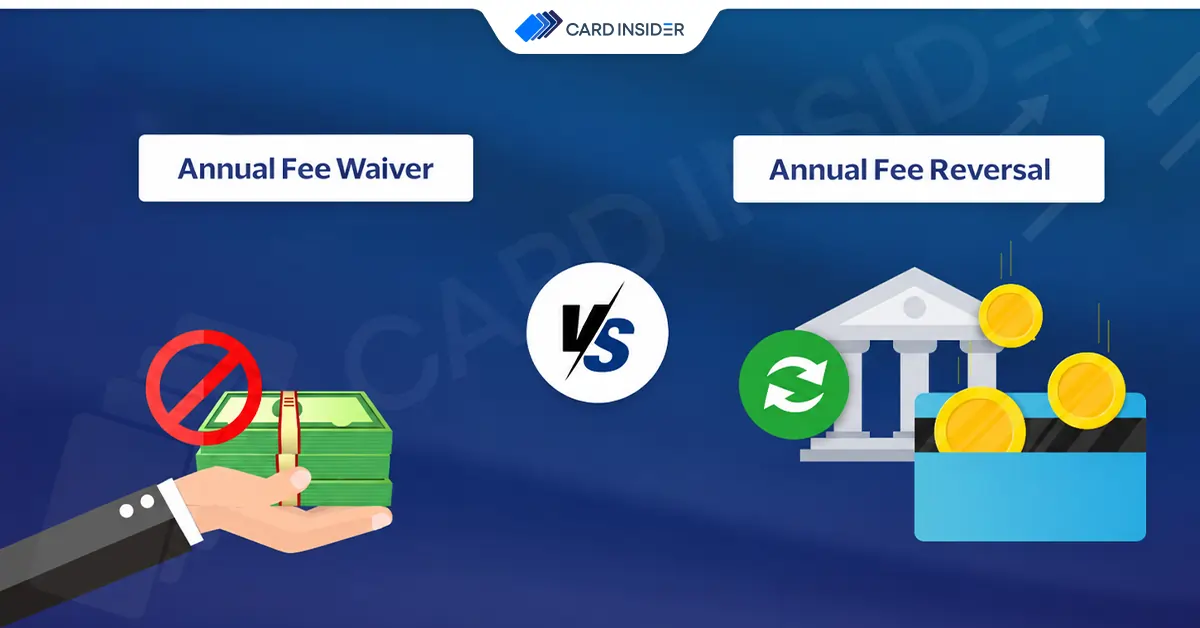
On the other hand, an annual fee reversal happens after the fee has been charged to your card.
Knowing how these two options work can help you avoid unnecessary charges and use your credit card more wisely. It also helps you plan your spending better so you can take full advantage of the benefits without paying extra.
What is an Annual Fee Waiver?
An annual fee waiver is part of the credit card offering, which encourages the cardholder to spend by using the card. Whenever you meet the bank’s spending requirement, your annual fee will be waived.
Some credit cards do not charge any annual fee, while other cards require you to spend a certain amount of money so that you don’t have to pay an annual fee.
As long as you meet the required conditions, the waiver is applied automatically, making it an easy and hassle-free way to save money on your credit card.
What is an Annual Fee Reversal?
An annual fee reversal works differently because the fee is first charged to your credit card, and only later can it be removed. First, the bank charges you an annual fee; you can request a refund from the bank, but only if you have spent a certain amount using your card.
It works similar to an annual fee waiver, with the only difference being that the fee is first charged to the card and later refunded. This type of benefit is usually offered by a few credit card issuers like SBI Card.
Sometimes, if you say you’re thinking of closing the card, the bank may reverse the fee to keep you as a customer. In this situation, the fee will show up in your statement at first, but if your request is approved, the same amount is credited back to your account, canceling out the charge.
Bottom Line
Understanding the difference between an annual fee waiver and an annual fee reversal can help you manage your credit card better and avoid paying charges you don’t need to. When you know how each one works, it becomes easier to read your statements and understand why a fee was or wasn’t charged.
- Annual Fee Waiver = fee is not charged at all once spending conditions are met.
- Annual Fee Reversal = fee is first charged, then later credited/refunded back.
A waiver makes things straightforward because the fee is simply not added if you meet the conditions, so there’s no extra step involved. Knowing both options helps you plan your spending and use your card to get the most value without unnecessary costs.