
History of Credit Cards in India
Credit cards first came into existence in the early 20th century, serving as a convenience for wealthy individuals to avoid carrying cash. The first widespread credit card system emerged in the 1950s with the Diners Club, which allowed members to pay at various restaurants and businesses. This concept rapidly evolved with the creation of Visa and MasterCard in the 1960s, transforming credit cards into a universal payment method accepted worldwide. Over the years, evolution in technology, like electronic transactions and online shopping, have greatly expanded their use.
In India, the concept of credit has existed in various forms for centuries, from lending within community networks to institutional banking practices. However, the introduction and evolution of credit cards stand out as a modern financial phenomenon that transformed millions’ shopping and banking habits. This article explores the interesting history, important developments, and the significant impact of credit cards on the Indian economy and its people.
Introduction of Credit Cards in India
The history of credit cards in India begins in the early 1980s, marking a significant departure from traditional forms of lending and a step towards modern financial services. Unlike the global scene, where credit cards debuted around the 1950s, India embraced this financial tool relatively later. The initial phase wasn’t an instant hit due to the conservative banking approach, limited technological infrastructure, and the society’s skepticism towards ‘borrowing’ culture.
The first players were foreign banks. In 1980, the Central Bank of India introduced the first-ever credit card to the Indian market, named Centralcard, making a significant mark in banking history. However, the launch of Andhra Bank’s Visa-branded credit card in 1981 caused a wider acceptance. These developments set the stage for a financial revolution that would lead to credit cards becoming a vital part of India’s economy. This would increase consumer spending and contribute to the growth of the retail and e-commerce sectors.
Timeline
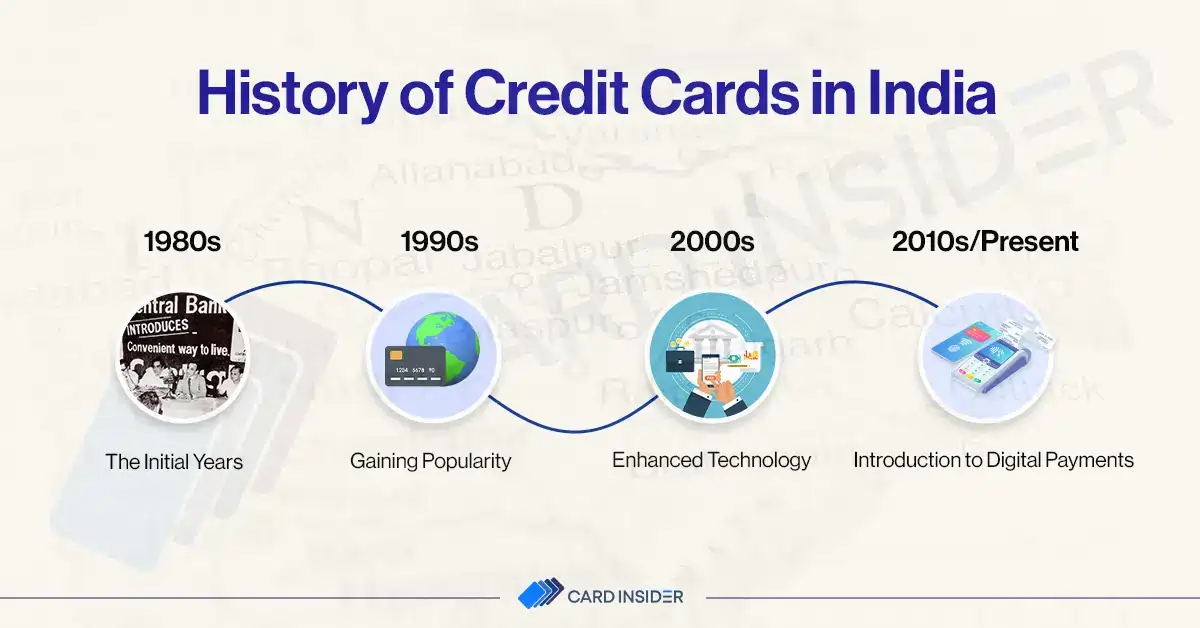
The 1980s: The Initial Years
In the early years following their introduction, credit cards in India were not widely accepted. This lack of acceptance could be associated with various factors, including limited awareness, the absence of a strong telecommunications infrastructure necessary for transaction authorizations, and a general concern towards non-traditional banking methods. The Central Bank of India launched the first credit card in India in 1980.
1990s: Economic Liberalization
The true potential of credit cards in India began to be realized in the 1990s following the economic liberalization. This period saw a significant increase in foreign direct investment and the entry of multinational banks into the Indian market. Companies started introducing cards with enhanced features and benefits, appealing to a larger population. The liberalization era also witnessed the foundation of domestic networks and financial institutions that began exploring the credit card business, further propelling the market’s growth.
2000s: Technological Innovations
The beginning of the 21st century brought the internet revolution, changing India’s credit card usage landscape. Online transactions began gaining popularity, and credit cards became a preferred mode of payment for their convenience and security. Banks and financial institutions took advantage of this trend by providing reward programs, cashback offers, and partnerships with merchants to make credit card usage more appealing. The 2000s saw the introduction of several regulatory measures by the Reserve Bank of India (RBI) to ensure consumer protection and the healthy growth of the credit market. These measures included guidelines for issuing cards, transparency in terms of charges, and promptly addressing customer grievances.
2010s Onwards: Digital Payments and the Future
The demonetization of high-value currency notes in November 2016 represented a significant shift towards digital payments in India, including credit cards. This period also saw the rise of fintech companies offering innovative payment solutions, further encouraging cashless transactions. More recently, co-branded cards, contactless payments, and securing transactions through biometrics have gained traction, signaling a move towards more secure and convenient payment methods. The RBI regulations, aimed at protecting consumer interests and ensuring fair practices, have boosted trust in credit cards.
Challenges and Regulatory Measures
The following measures have significantly made credit card usage safer, more secure, and consumer-friendly in India.
Cyber Security
With the surge in credit card usage, India witnessed a rise in cyber fraud cases, including phishing, skimming, and unauthorized transactions, which raised concerns about the security of online financial transactions.
Two-Factor Authentication
For improved security measures, the Reserve Bank of India (RBI) has made it mandatory to use a two-factor authentication process for online and card-not-present transactions.
SMS and Email Alerts
For every transaction, mandatory alerts must be sent to the cardholder’s registered mobile number and email. This process ensures that cardholders can track their activity in real-time and stay updated about their transactions.
Credit Limit
Establishing specific limits on credit card transactions, particularly for international usage, is important to protect consumers from accumulating excessive debt. These limits can help prevent individuals from overspending and encountering financial difficulties.
Transparent Billing Practices
According to the Reserve Bank of India (RBI) guidelines, banks must provide comprehensive billing statements and transparent terms of use for credit card operations. These regulations aim to ensure transparency and fairness in credit card transactions for the benefit of consumers.
Bottom Line
The history of credit cards in India shows the country’s quick economic and technological progress. Credit cards have evolved from their early days in the 1980s to being a key part of today’s digital economy. As we move forward, the evolution of credit cards is expected to accelerate further, driven by technological progress and an increasing focus on security and user experience. The future of credit card usage in India looks promising as they continue to change financial transactions and make things easier for customers. Credit cards will play a big role in India’s move towards full financial digitization as the market grows and develops.
Reader Comments
No comments yet — be the first to share your thoughts.